What is being built?
Name the user experience, the data path, the device or sensor role, and the backend services that make the product work.
Workbook for a one-hour medtech talk
The live talk gets people started with high-level concepts. This workbook is the follow-up handout for deeper reading, templates, and practical planning.
Workbook: 16-20 hours + 2.5-hour workshop
This site is not the script for the one-hour talk. The talk is a starter session that introduces the major ideas: apps, APIs, cloud systems, hardware, AI-assisted prototyping, regulation, privacy, cybersecurity, operations, and cost. The workbook gives participants a place to come back when they want plain-English explanations and practical next steps.
The goal is ecosystem fluency. Participants should leave with enough shared language to talk with software, hardware, clinical, regulatory, privacy, security, operations, and business teams without pretending to be specialists in every area.
Talk focus
This session introduces the fundamental building blocks involved in developing modern applications, with a focus on software architecture, system design, and supporting technologies. It will cover how components such as data, infrastructure, APIs, and development frameworks fit together, along with practical approaches to selecting and integrating these elements.
The discussion will also touch on how these principles extend to hardware-enabled systems and emerging AI-driven applications, providing a structured perspective for building scalable and maintainable solutions.
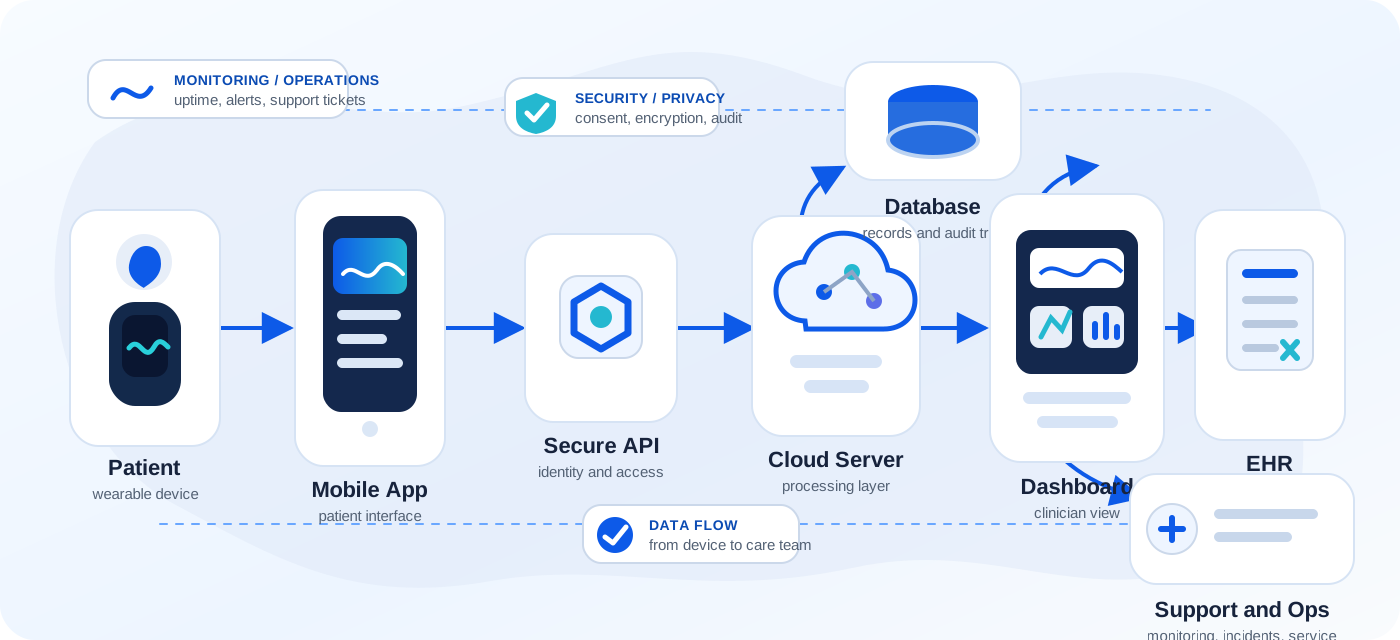
Name the user experience, the data path, the device or sensor role, and the backend services that make the product work.
Identify the patient, clinician, IT, privacy, quality, procurement, support, and finance stakeholders affected by the product.
Separate a promising prototype from a pilot that can run safely and a production product that can be supported over time.
During the talk, keep the short talk companion open. After the talk, use the workbook path to move from vocabulary into the deeper pages.
Patient apps, clinician dashboards, intake tools, reminders, risk scores, reports, and administrative views.
Secure services that move data between apps, databases, devices, EHRs, analytics tools, and support teams.
Sensors, firmware, edge processing, wireless connectivity, calibration, battery life, and field maintenance.
Fast prototypes, interface drafts, code scaffolds, and workflow experiments that still need review, testing, and controls.
Servers, databases, backups, monitoring, deployments, incident response, and monthly operating costs.
Requirements, traceability, validation, risk management, cybersecurity, quality systems, and postmarket learning.
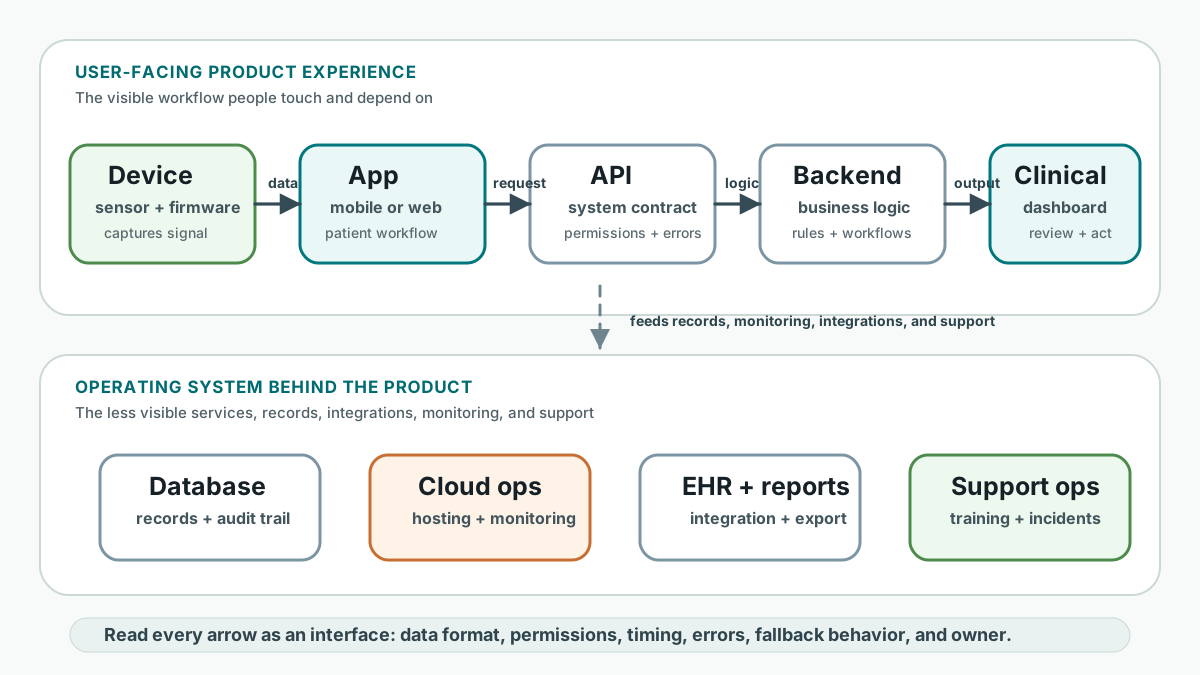
Use the glossary and templates as references alongside any page. The sequence below moves from vocabulary to ecosystem, then engineering, regulation, software, hardware, operations, and business planning.
| Step | Page | Why it comes here |
|---|---|---|
| 1 | Talk companion | Collects the major ideas for the one-hour session. |
| 2 | Pathways and site map | Shows how all workbook pages connect and separates software, hardware, regulatory, operations, and business paths. |
| 3 | Program structure | Explains the workbook purpose and learning sequence. |
| 4 | Software + hardware basics | Builds shared language for apps, APIs, servers, devices, and cloud systems. |
| 5 | Medtech landscape | Connects the technical system to clinical, operational, and regulatory stakeholders. |
| 6 | Getting started / engineering | Turns an idea into concrete builder deliverables and decisions. |
| 7+ | Specialized workbook modules | Deepen the plan across software, hardware, regulation, quality, security, operations, funding, and cost. |
Start with the talk page, workbook map, and basic parts of a modern medtech system.
Understand stakeholders, early engineering work, app choices, team design, and clinical workflow fit.
Understand Health Canada and international pathways, quality systems, risk methods, and ecosystem integration choices.
Translate product requirements into architecture, SDLC execution, verification, and data governance.
Plan for interoperability and cybersecurity before late-stage surprises.
Sensors, firmware, reliability, hosting provider choices, and deployment operations for real-world use.
Finish with reimbursement, operating economics, funding pathways, and one integrated scenario.
You do not need to become a software engineer or hardware engineer to lead in medtech.
Clinical, operational, policy, finance, research, and business experience all reveal constraints that builders need: who uses the product, what must not fail, what evidence matters, and where adoption will break down.
Open the talk page for the live session, then use the pathways page to choose your follow-up reading path.