Time-series sample
Fictional vitals CSV for discussion of drift, gaps, and labeling. Not real patient data.
Capstone
Apply the full curriculum to a connected remote monitoring scenario with supplied requirements, data, and scoring rubric.
Workshop: 2.5 hours + pre-read
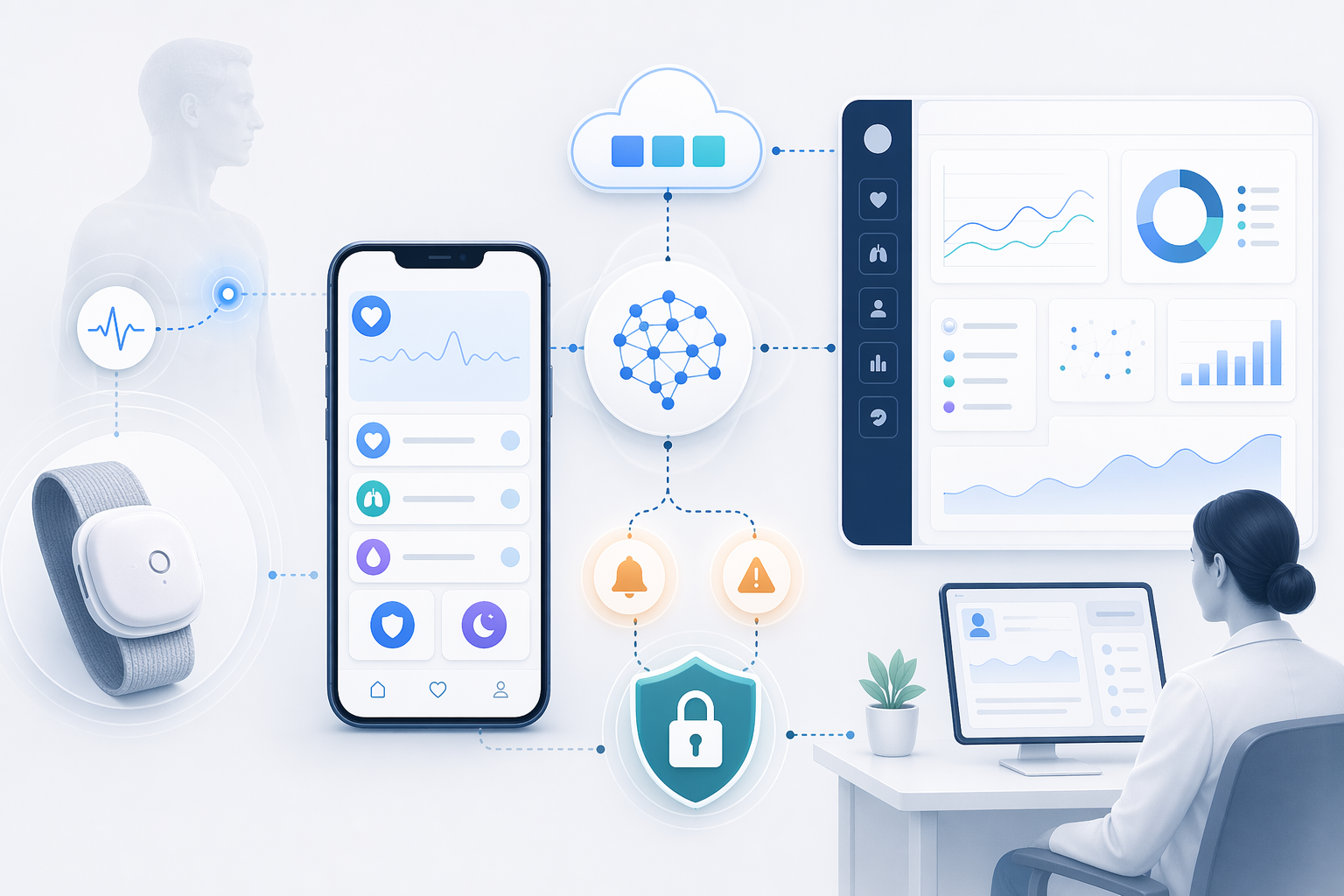
You are preparing a 90-day Alberta pilot for a fictional home-monitoring product: wearable sensor, patient mobile app, clinician web dashboard, and advisory-only AI triage support. The product is not approved for sale; this exercise is about planning discipline, not clinical claims.
Assume stakeholders include cardiology, nursing, privacy, IT security, procurement, and finance—as described in the mock requirements pack.
This page helps learners apply the workbook to one integrated scenario. The goal is not to memorize every page; it is to practice connecting workflow, software, hardware, privacy, AI, cybersecurity, operations, risk, and cost into one coherent pilot plan.
Use it after the foundation pages and at least one software, hardware, regulatory, or operations pathway.
Fictional vitals CSV for discussion of drift, gaps, and labeling. Not real patient data.
Numbered stakeholder asks and hard constraints (residency, SBOM, economics).
Seed rows to complete with severity, probability, and verification IDs.
Agenda, breakouts, and common failure modes.
What good and shallow answers look like.
Submit or present the following artifacts. Names are suggestions—match your QMS template IDs if applicable.
Supporting templates: templates catalog (traceability matrix, PCCP outline, PIA worksheet, IR runbook, PMS plan).
| Criterion | Weight | What “meets” looks like |
|---|---|---|
| Safety and risk traceability | 30 | Hazards linked to controls and verification; stale data and alert fatigue addressed. |
| Privacy and Alberta deployment | 25 | HIA / custodian language; residency; PIA triggers; subprocessors. |
| Architecture and operations | 20 | Realistic failover, monitoring, SBOM/CVE response tie-in. |
| AI governance | 15 | PCCP or change policy; monitoring metrics; bias / subgroup discussion. |
| Economics | 10 | Order-of-magnitude TCO coherent with architecture choices. |
Outstanding work explicitly connects mock requirement numbers to design inputs and tests.
Before the workshop, pick one deliverable and trace it back to the workbook pages and templates that support it.