In plain language
A product can be clinically useful and still fail commercially if the economics do not work. This page is about the money logic around adoption: who pays, who benefits, what it costs to deliver the product reliably, and whether the savings or outcomes are compelling enough for the buyer to continue.
For non-technical founders, this is important because technology decisions and business decisions are tightly linked. A feature that looks attractive in a demo may create support, integration, or training costs that make the product much harder to sell. The goal is not just to prove the product can work. It is to prove the product can work sustainably.
What this page helps you decide
This page helps teams explain who pays, who benefits, and what the product actually costs to adopt. Reimbursement and TCO conversations include implementation, training, integration, support, security, updates, hosting, workflow disruption, and renewal logic.
Use it before pricing or fundraising claims become detached from buyer value and operational reality.
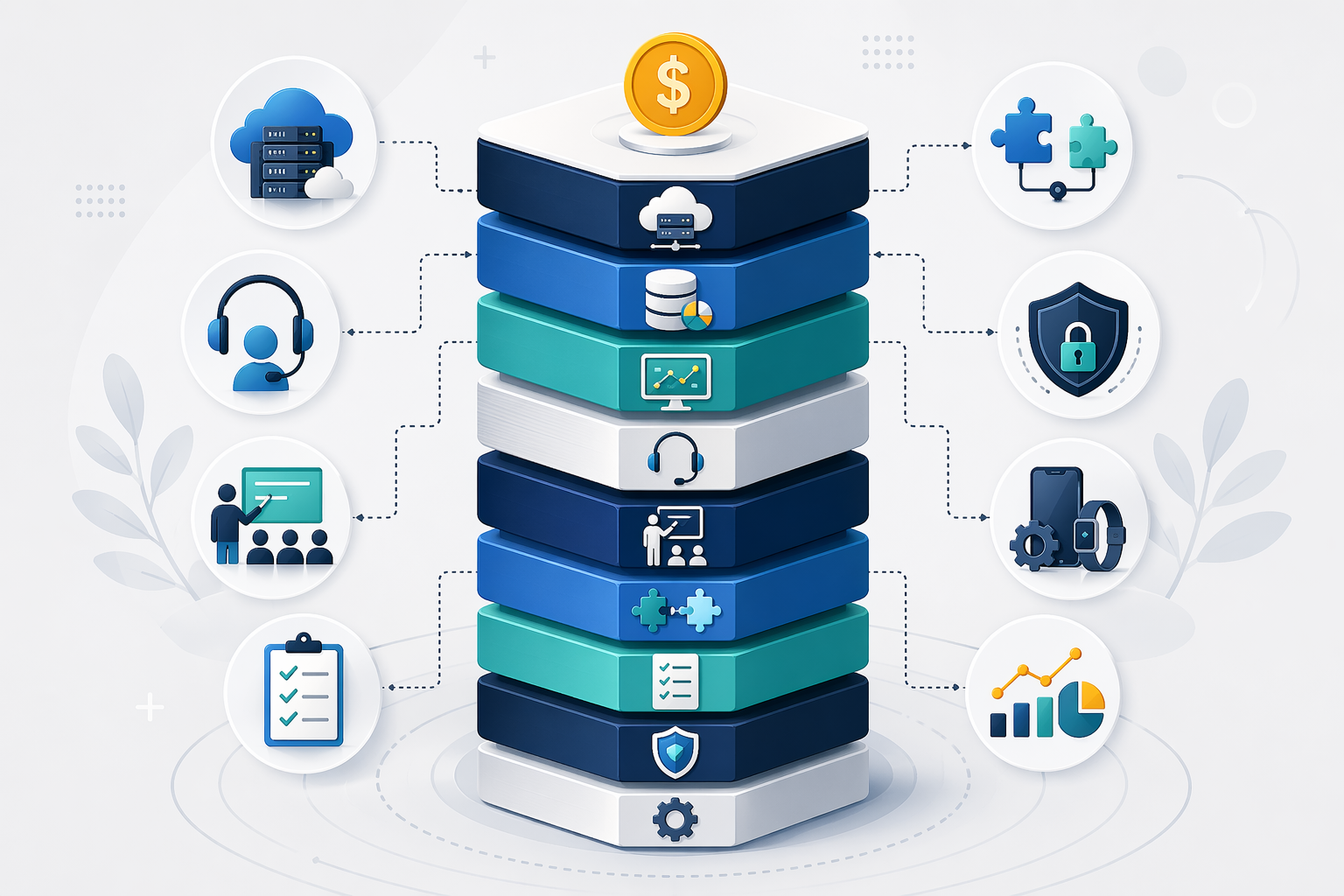
Economic model components
Total cost of ownership is not only cloud spend. It includes implementation time, integration work, security operations, customer support, and ongoing model or firmware updates. Founders often underestimate people and process costs while focusing only on server invoices.
In practical terms, TCO is the full cost of making the product usable and dependable over time. Buyers do not experience your product as a software subscription alone. They experience setup effort, training, workflow disruption, support quality, update reliability, and integration burden. If those hidden costs are high, even a promising product can become hard to justify.
- Upfront implementation and integration cost.
- Ongoing subscription, service, and training costs.
- Operational savings and clinical outcomes impact.
- Reimbursement pathways and coding assumptions.
Who gets value and who pays
One of the most important founder questions is whether the same party who receives the value is also the party expected to pay. If clinicians save time but the procurement budget sits elsewhere, adoption can be slow. If a hospital pays but the biggest gains show up in another part of the system, the business case becomes harder to make. Many good products struggle because the value story and the payment pathway are misaligned.
That is why reimbursement, procurement, and workflow improvement should be thought about together. You are not only selling functionality. You are asking an organization to change how work is done and to absorb both the costs and the risks of that change.
How hosting cost fits TCO
As usage grows, infrastructure costs become more sensitive to traffic patterns, uptime targets, backup retention, and data storage growth. A pilot may run on a few hundred dollars per month, but production-grade operations can multiply that number when redundancy, monitoring, and security controls are added.
Use the dedicated hosting providers and cost models page for worked examples and assumptions.
Hosting cost matters, but it is usually only one part of the operating picture. Founders often make the opposite mistake in different directions: either they ignore hosting altogether, or they focus so heavily on cloud cost that they miss the larger people and process burden around implementation, support, training, and compliance. TCO should capture all of it.
Hidden costs founders often miss
Some of the most important costs do not show up in the first spreadsheet. They appear later as customer onboarding time, internal training, help desk load, clinician retraining after updates, device replacement, implementation support, security reviews, and post-incident cleanup. These costs are especially easy to miss when a team is still focused on proving the concept.
A useful discipline is to imagine the first year after launch in operational detail. How many customer questions will need human support? How often will integrations need attention? How much time will your team spend explaining updates, troubleshooting issues, and maintaining trust? Those answers usually matter as much as the software bill.
Founder checklist
- Define who captures value and who pays.
- Estimate support burden for device fleet and software updates.
- Validate procurement constraints in target health systems.
- Include hosting, backup, monitoring, and incident response staffing in your model.
This checklist works best when translated into concrete scenarios. Build a base case, a conservative case, and a stress case. That makes it easier to see whether your business model depends on ideal conditions that may not hold in real deployments.
Concrete advice for non-technical founders
When discussing economics with your team, ask for plain answers to four questions. Who pays? Why would they keep paying? What new work does the product create for them? What cost or outcome improvement is strong enough to justify that burden? Those questions are simple, but they force clarity around reimbursement, operational burden, and long-term value.
It is also worth asking what assumptions are weakest. Maybe adoption depends on fast integration, or on clinicians changing behavior, or on a reimbursement pathway that is still uncertain. Weak assumptions are not fatal, but they should be visible. Strong founders do not hide them inside optimistic spreadsheets.
Funding pathways to support this plan
For many Canadian founders, reimbursement planning and cost modeling should be paired with a funding strategy. Review funding in Canada and Alberta for programs such as SR&ED, Mitacs, NSERC, CIHR, Alberta Innovates, and university or health-system partnership pathways.
Funding can help you bridge the period before revenue logic is fully proven, but it should not replace economic discipline. Grants and partnerships are useful accelerants when they support a credible plan. They are much less helpful when they are masking an unclear path to long-term adoption.
Practical next step
Create a TCO sketch for one customer segment and separate one-time implementation costs from monthly operating and support costs.
- Template or worksheet: monthly hosting estimator.
- Glossary terms: TCO, reimbursement pathway, procurement.
- Pathway links: Funding landscape, Capstone case study.