Apps and workflows
Apps are the visible workflow. The important question is not only what the screen shows, but who uses it, when they use it, and what happens when something is missing, late, confusing, or wrong.
One-hour talk companion
The talk is a high-level entry point. This page gathers the main ideas so participants can follow the conversation, then use the workbook for deeper follow-up.
One-hour talk companion
The one-hour session is meant to give people enough language to start asking better questions about medtech ideas. It is not a full course in software engineering, hardware design, regulatory strategy, privacy law, or quality systems. The goal is orientation: what parts exist, how they connect, and why early product decisions affect evidence, safety, cost, and adoption later.
Use the talk to build a mental map. Use the workbook when you want to slow down, read a topic in plain English, and follow links into templates, examples, and next-step questions.
| 1 | Frame medtech as a connected system: users, workflows, data, devices, apps, cloud services, and support operations. |
|---|---|
| 2 | Introduce the main building blocks: app, frontend, backend, API, database, hosting, sensors, firmware, and AI-assisted prototyping. |
| 3 | Explain why medtech changes the bar: privacy, cybersecurity, regulatory claims, quality records, risk controls, verification, and validation. |
| 4 | Connect the product to real-world adoption: clinical workflow fit, integration, operations, support, total cost of ownership, and funding logic. |
| 5 | Show where to go next in the workbook: software path, hardware path, regulatory path, and capstone case study. |
Most product conversations become clearer when the team can sketch the whole system, not only the app screen or device. A connected medtech product may include a sensor or device, patient-facing app, API, cloud service, database, clinician dashboard, EHR integration, alerts, support tools, and monitoring.
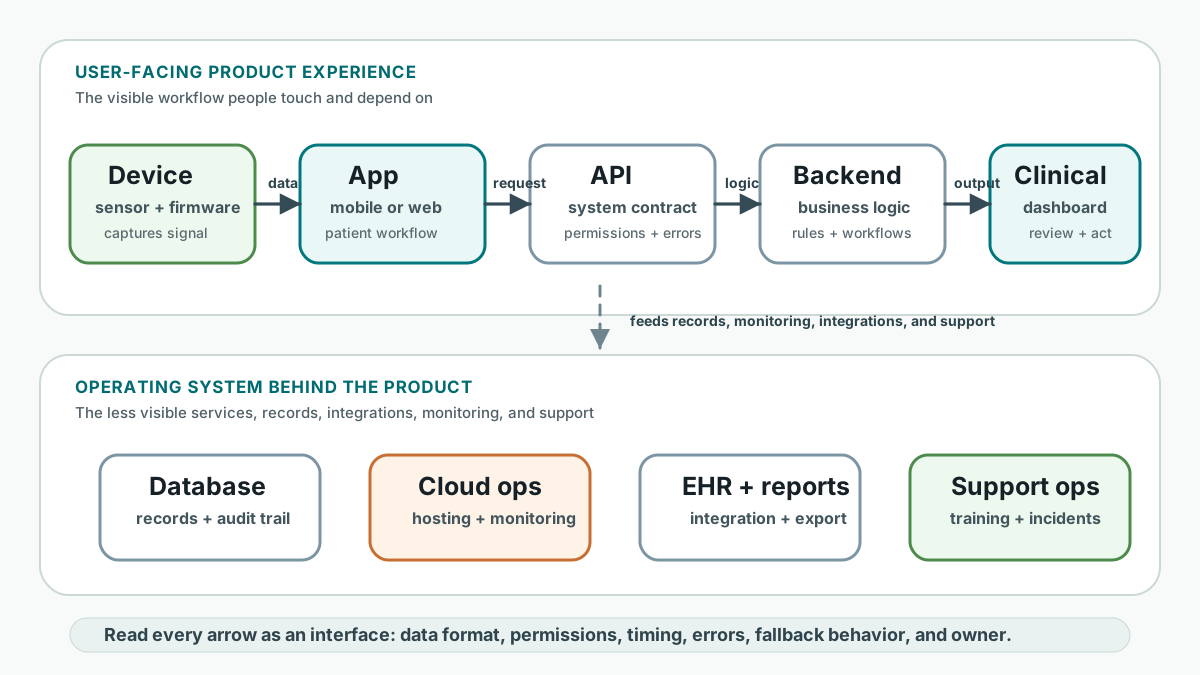
Apps are the visible workflow. The important question is not only what the screen shows, but who uses it, when they use it, and what happens when something is missing, late, confusing, or wrong.
APIs move information between parts of the product. Cloud services store, process, monitor, and protect the system. Data governance explains where data came from, who can use it, and whether it can be trusted.
Hardware determines what signals are available and how reliable those signals are. Software cannot always fix bad sensor placement, noisy inputs, calibration drift, weak connectivity, or poor battery planning.
AI tools can help draft screens, workflows, code, and explanations quickly. In medtech, fast drafts still need human ownership, testing, privacy review, cybersecurity review, and clear accountability boundaries.
Claims, intended use, risk, verification, validation, and quality records shape what can be safely piloted or marketed. The earlier those assumptions are named, the less rework appears later.
A product must be deployed, monitored, supported, updated, and paid for. Hosting cost is only one part of total cost; support, integration, training, security, and maintenance usually matter just as much.
Use the workbook as a reference, not as something you need to memorize during the session. Start with the pathway that matches your next decision.
During the live session, use this page to keep the major concepts visible. After the session, choose one workbook pathway instead of trying to read everything at once.