What SDLC means
SDLC stands for software development life cycle. It is the repeatable process your team follows to discover needs, define requirements, design architecture, build and test code, release safely, and maintain the product over time. In medtech, SDLC is not optional process overhead; it is how safety, reliability, and evidence are managed.
What this page helps you decide
This page helps learners understand how software work moves from discovery to maintenance. Each stage has a different definition of done, different evidence expectations, and different ownership risks.
Use it to prevent the common mistake of treating launch as the finish line. In medtech, launch creates new responsibilities for monitoring, support, updates, incidents, and controlled change.
How team roles map to SDLC
Non-technical founders do not need to write code, but they do need to understand ownership by stage. Product and clinical leads are strongest in discovery and requirements. Engineering leads drive architecture and implementation. QA/RA and validation stakeholders become critical before release. Operations and security ownership grows after launch. When these handoffs are unclear, progress slows and risk rises.
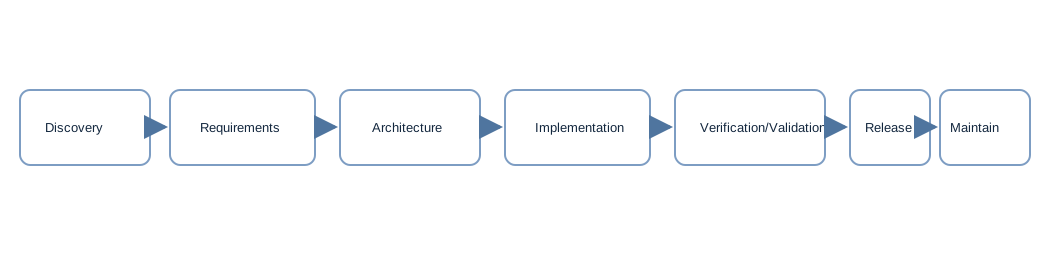
Stage-by-stage in founder language
| Stage | What happens | Founder role |
|---|---|---|
| Discovery | Define problem, users, workflow risk, and success criteria. | Align on scope and measurable outcomes. |
| Requirements | Translate needs into testable functional and non-functional requirements. | Approve priorities and clarify tradeoffs. |
| Architecture | Choose system boundaries, data flows, and deployment model. | Validate assumptions on cost, risk, and speed. |
| Implementation | Build features, interfaces, and infrastructure. | Ensure scope discipline and unblock decisions quickly. |
| Verification/Validation | Test correctness and real-world suitability. | Confirm evidence quality and launch readiness criteria. |
| Release | Deploy with rollback, monitoring, and incident plans. | Set go/no-go decision framework. |
| Maintenance | Monitor performance, fix issues, and manage controlled changes. | Fund ongoing operations and governance. |
Definition of done should change by stage
A prototype can be done when it answers a learning question. A pilot is not done until support, monitoring, privacy assumptions, and known failure behavior are clear. A production release is not done until deployment, rollback, training, documentation, and maintenance ownership are in place. Calling all three “done” the same way hides risk.
Common misconception
Many founders think SDLC ends at launch. In reality, launch is the midpoint. Most cost and risk appear in maintenance: updates, support, incident handling, and evolving compliance expectations.
Recommended reading order for beginners
Continue with 1) Team building and stack choices, 2) Software architecture patterns, and 3) Hosting providers and cost models to move from process into implementation choices.
Practical next step
Map your current roadmap items to SDLC stages and mark the owner, evidence needed, and release risk for each item.
- Template or worksheet: Gantt schedule template.
- Glossary terms: SDLC, release management, change control.
- Pathway links: Architecture patterns, Team and stack.